Most homeowners only think about their appliance hoses and connectors when something goes wrong — a puddle under the fridge, a wet spot behind the washer, a dishwasher that won’t stop dripping. But by the time you notice a leak, the hose has often already failed. The truth is, appliance hoses and connectors have a shelf life, and replacing them before they fail is one of the simplest ways to prevent costly water damage.
Here’s what every homeowner should know about hose lifespan, warning signs, and replacement schedules.
Why Hoses Fail Even When They Look Fine
Rubber and even braided stainless-steel hoses degrade from the inside out. Water pressure, temperature changes, and mineral content all wear down the internal lining over time. A hose can look perfectly intact on the outside while the material underneath has already started cracking or thinning — which means visual inspection alone isn’t enough to catch a problem before it happens.
Recommended Replacement Schedule by Appliance
Washing Machine Hoses
Replace every 3–5 years, regardless of appearance. Washing machine hoses handle constant water pressure and are one of the most common sources of major home water damage. Braided stainless-steel hoses last longer than standard rubber ones, but even they should be replaced on a set schedule rather than “until they break.”
Refrigerator Water Lines (Ice Maker/Water Dispenser)
Replace every 5–7 years, or immediately when installing a new refrigerator. Plastic tubing is especially prone to becoming brittle over time, and a slow leak behind a refrigerator can go unnoticed for months since it’s tucked out of sight.
Dishwasher Water Lines and Drain Hoses
Replace with every new dishwasher installation, and inspect annually. Gaskets and fittings form a seal that doesn’t reset once broken — reusing an old line on a new appliance often leads to a poor connection, even if it looks undamaged.
Gas Appliance Connectors (Ranges, Dryers)
Replace every 8–10 years, and always when moving or reinstalling the appliance. Gas connectors should never be reused after disconnection. Any sign of corrosion, denting, or wear is reason for immediate replacement — this is a safety issue, not just a maintenance one.
Warning Signs You Shouldn’t Ignore
Even on a normal replacement schedule, watch for:
- Bulging, cracking, or discoloration on the hose exterior
- Rust or corrosion near fittings and connection points
- Any dampness, mineral buildup, or water stains near the connection
- A hose that feels stiff or brittle when bent slightly
- Slow-draining or reduced water flow, which can signal internal blockage or narrowing
If you notice any of these, don’t wait for the scheduled replacement — get it swapped out right away.
Why Replacing Hoses Proactively Saves You Money
A washing machine hose failure alone is one of the leading causes of home water damage insurance claims, and the cost of a new hose is minimal compared to the cost of repairing flooring, drywall, or cabinetry after a burst line. Replacing hoses on a schedule — rather than waiting for failure — is one of the cheapest forms of home protection available.
Let the Professionals Handle It
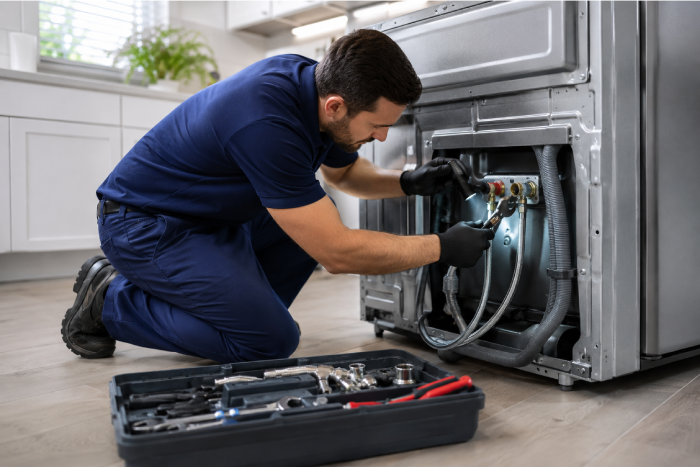
At Appliance Installs LLC, every installation and repair includes a full inspection of hoses, connectors, and fittings — not just the appliance itself. Our factory-certified technicians know exactly which components are due for replacement and make sure every connection is secure, up to code, and built to last.
Don’t wait for a leak to find out your hose needed replacing months ago. Contact Appliance Installs LLC today to schedule an inspection or installation in Las Vegas and the surrounding area.